
Geopolitics dominates Davos: Values-based pragmatism as a blueprint for action
From Trump and transatlantic tensions to AI’s reality check and sustainability’s reinvention, Davos 2026 signals a shift toward values-based pragmatism....
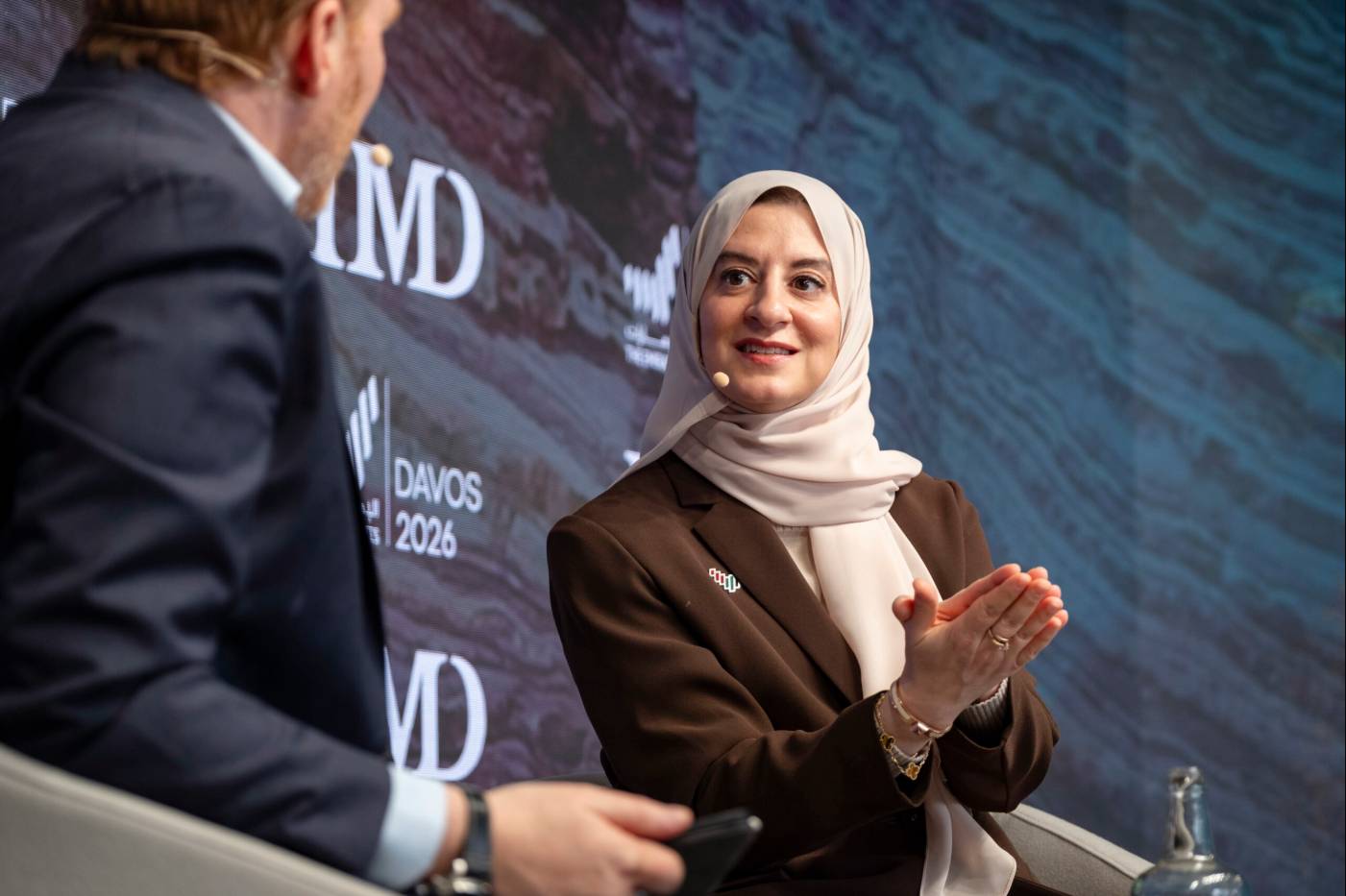
by David Bach, Huda Al Hashimi Published February 2, 2026 in Geopolitics • 11 min read
In the wake of this year’s World Economic Forum in Davos, one theme cut across speeches and private conversations alike: the world is more volatile, more fragmented, and harder to predict. Leaders pointed to geopolitical strain, technological disruption, and economic transition as forces reshaping the global landscape. The message was clear – volatility is not a phase; it is the backdrop.
For countries and their governments, that reality carries a stark implication: waiting for clarity is not a viable strategy. The pace of change is compressing the time leaders have to respond, even as the stakes of decisions grow.
That pressure is visible across multiple fronts. Trade relationships and security commitments are shifting, technological breakthroughs are outpacing regulation, and the energy transition is reshaping entire industries. At the same time, citizens expect more from government, not less – more security, better services, and greater resilience.
In contrast, Edelman found that optimism about the next generation’s prospects is significantly higher in countries such as the UAE (63%), China (56%), Indonesia (56%), and India (53%).
Across much of Europe, the conversation about the future has taken on a defensive tone. Living standards remain high, and institutions are strong, yet political debate often revolves around what might be lost rather than what could be built. Reform agendas slow under the weight of bureaucracy and social division. Businesses wait for clarity. Governments talk more about risk than opportunity. That caution is understandable. But it carries costs.
The 2026 Edelman Trust Barometer shows that confidence in the future is weakening in many parts of the world: only 32% of people globally believe the next generation will be better off than today. This erosion of optimism is particularly visible across much of Europe, where forward-looking confidence has all but vanished. In France, just 6% of respondents believe the next generation will be better off, with Germany and Italy at 8%, the Netherlands at 11%, and the UK at 14% – well below levels seen in many emerging economies.
This subdued outlook is echoed in European social surveys. Research from Eurofound finds that many Europeans report rising economic insecurity and declining confidence in their future living standards compared with the pre-pandemic period, reinforcing the sense that progress feels less assured than it once did.
In contrast, Edelman found that optimism about the next generation’s prospects is significantly higher in countries such as the UAE (63%), China (56%), Indonesia (56%), and India (53%). Trust is also becoming more insular, with many people less willing to trust those outside their immediate circles.
When belief in progress fades, so does the political space for future-focused investments and reforms. Risk aversion grows, polarization deepens, and governments become more reactive than directional. It can become a vicious cycle.
But this mood is not universal.

“Over the past two decades, the UAE has continuously reinvented the way it works, building a distinctive model of Strategic optimism, one grounded not in assumption, but in deliberate action.”
In working with leaders across regions, a pattern becomes visible. Faced with similar pressures, some countries become more cautious and inward-looking, while others use disruption as a catalyst to clarify priorities and accelerate reform. The difference is not random. It lies in how leaders frame uncertainty, and whether that framing is translated into institutions that create momentum rather than hesitation.
So why do some countries respond decisively to shocks and stress periods while others hesitate? The United Arab Emirates (UAE) offers one of the clearest examples of how strategic intent translates into practice.
Over the past two decades, the UAE has continuously reinvented the way it works, building a distinctive model of Strategic optimism, one grounded not in assumption, but in deliberate action. Across government and the private sector, confidence has been projected in step with implementation, creating an environment in which people, businesses, and investors feel able to move forward even amid uncertainty.
The approach does not assume that “everything will work out.” Instead, it recognizes that disruption is constant and that challenges take many forms. This optimism, as practiced by the UAE, combines ambition with discipline: identifying risks early, embracing shifts, and converting intelligence into mechanisms that anticipate challenges rather than react to them.
In practice, this mindset has led the UAE to accelerate rather than retreat during periods of disruption. Amid shocks to global aviation, it doubled down on long-term investments in connectivity. During episodes of regional instability, it strengthened its position as a logistics and trade hub. In each case, uncertainty was treated not as a constraint, but as a signal to act with greater clarity and intent.
After 9/11, when many airlines cut back, Emirates placed one of the biggest aircraft orders ever. At the height of the COVID-19 crisis, while many governments were still managing the immediate emergency, teams were already working on post-pandemic strategies.
These efforts involved not only government officials, but national airlines, logistics operators, investors, and regulators acting in concert to prepare for recovery. But government direction alone does not create sustained traction: execution does. Emirates’ post-9/11 aircraft order was a corporate strategic decision, taken with commercial risk. Dubai’s rise as a logistics hub required billions in private infrastructure investment. Abu Dhabi’s diversification into technology and finance depended on attracting global investors willing to commit patient capital.
The government’s role was critical, but as an enabler, not an operator. By reducing regulatory friction, maintaining macroeconomic stability, and signaling long-term commitment to reform, public institutions created the conditions for private actors to move boldly. The optimism is shared: government sets direction, businesses “do,” investors commit capital, and citizens see tangible results. This reflects a deliberate governing philosophy: disturbances are treated not as a signal to pause, but as moments to sharpen the trajectory. Uncertainty becomes a forcing mechanism for prioritization and reform, including scrutinizing what rules and regulations stand in the way and therefore have to go.
That philosophy also shows up in how ambition is framed. Leaders speak openly about aiming to be “first” in emerging domains, for instance, Abu Dhabi’s goal to be “the first fully AI-native government” by 2027, not because outcomes are guaranteed, but because direction matters. Strategic optimism, in this sense, is about aligning institutions, investors, and citizens around a shared forward trajectory. The countries gaining ground are those that have built ecosystems where public institutions, businesses, and investors are aligned to act in that reality, rather than wait for it to pass.
Strategic optimism is often mistaken for wishful positivity. In practice, it is a mindset, a leadership philosophy, and a way societies organize to act under uncertainty. It starts with the assumption that uncertainty is structural, not temporary. Instead of waiting for conditions to stabilize, governments design institutions that can act, adapt, and course-correct as the environment shifts.
Optimism, in this sense, is not blind faith. It is disciplined confidence, grounded in society’s ability to navigate disruption and deal successfully with challenges. It reflects a belief, built through experience, that setbacks can be absorbed, risks can be managed, and uncertainty can be translated into a forward direction.
Long-term national visions cascade into sector strategies and agency-level plans.
In the UAE, this operating model is visible in how the government sets priorities, aligns institutions, and tracks delivery.
Long-term national visions cascade into sector strategies and agency-level plans. Priorities are translated into measurable targets, and implementation is closely tracked. Strategy is not treated as a document that sits on a shelf. It is a tool for execution. It mobilizes action across communities.
This traction is not accidental. It is reinforced by clear, top-down leadership that treats optimism as a responsibility, setting the journey ahead, aligning institutions, and rallying all stakeholders around ambitious goals with defined timelines.
This discipline is supported by enabling platforms such as national programs, outcome-based KPIs, and government-wide digital performance systems, which translate vision into measurable results and sustain confidence through delivery.
Cross-government national programs bring scale and speed by mobilizing multiple ministries around shared priorities; to date, more than 360 transformational projects have been delivered across 12 sectors and 39+ government entities, engaging over 2,000 public servants and tracking more than 900 strategic targets.
Accountability is reinforced through outcome- and impact-based KPIs embedded in ministerial performance contracts and aligned with 10-year national agendas. Delivery is monitored through platforms such as the Adaa performance system, which provides real-time visibility into transformational projects, and the Government Accelerators, which compress delivery timelines by resolving complex challenges within 100-day sprints.
Innovation and future readiness are further institutionalized through platforms such as the Mohammed bin Rashid Centre for Government Innovation, where possibility is institutionalized. Dedicated teams explore unconventional policy solutions, asking “What if?” questions and pushing promising ideas into the mainstream. Innovation is not peripheral. It is built into how the system thinks and operates.
Additionally, anticipation is deliberate and intentional. For example, the UAE appointed a Minister of State for Artificial Intelligence in 2017, the first of its kind, well before AI became a mainstream policy priority elsewhere. The setup of the Artificial Intelligence, Digital Economy, and Remote Work Applications Office and its national AI programs anchored execution in future-critical capabilities. AI has since been embedded into education, public services, and government operations – not just adopting technology but redesigning how the state works. Over time, this has allowed the UAE’s way of work to evolve from traditional strategic planning toward strategic intelligence, shifting from static five-year plans to shorter three-year cycles and real-time adaptive governance models that respond quickly to global change.
Another platform has been intentionally created, in the last two years, to reduce friction inside government. A flagship initiative has been the drive toward “zero government bureaucracy,” which reflects a core principle: government processes should accelerate private sector initiative, not hinder it. The goal is not bureaucratic perfection; it is removing friction so businesses can move at the speed of opportunity. When a company can get regulatory approval in days instead of months, when investors can commit capital without navigating maze-like procedures, the entire ecosystem gains velocity. The signal is practical: processes should enable progress, not slow it.
Each of these elements, from vision to AI to multiple government platforms, reinforces the others. Direction creates coherence. Delivery builds credibility. Visible success strengthens the confidence to aim higher. Optimism becomes self-reinforcing – not because of rhetoric, but because systems deliver.

The UAE’s approach illustrates a critical insight: optimism cannot be legislated alone; it has to be built across society.
As stated earlier, the government provides the architecture: long-term vision, enabling regulation, infrastructure investment, and macroeconomic stability. But execution happens in boardrooms, on factory floors, in laboratories, and in the decisions of thousands of entrepreneurs and investors.
When DP World invests billions in port expansion, when Mubadala backs emerging technology companies, when Emaar commits capital to new developments, these are not government programs. They are market actors making strategic bets based on confidence in the country’s trajectory. That confidence is earned through consistent policy, visible delivery, and alignment between what the government promises and what the economy delivers.
This forward-looking coordination is the essence of strategic optimism. Government cannot mandate optimism, but it can create the conditions – credibility, predictability, reduced friction – where businesses, investors, and citizens choose to act as if the future is worth building.
Strategic optimism does not remove risk.
The global environment is unlikely to become simpler anytime soon; if anything, complexity will intensify. Technological change will accelerate. Geopolitical realignments will continue. Economic transitions will create winners and losers.
In this context, the dividing line between countries will not be who faces fewer shocks, but who has built institutions capable of acting despite them. Systems designed around caution alone will struggle to keep up. Systems designed for forward momentum will adapt faster.
Strategic optimism does not remove risk. It changes the posture toward it. It encourages governments to move early, to experiment, to learn, and to adjust. Over time, that compounds into a structural advantage in competitiveness, innovation, and public confidence.
The defining challenge of this decade is not simply managing risk. It is preventing risk awareness from turning into institutional hesitation.
The defining challenge of this decade is not simply managing risk. It is preventing risk awareness from turning into institutional hesitation.
Digital transformation, climate transition, and economic restructuring cannot be navigated by systems that freeze in the face of uncertainty. They require governments that can set the course, act early, learn quickly, and adjust accordingly.
Strategic optimism is about developing leaders and building organizations that continue to function when the future refuses to cooperate. Countries that master this discipline are not ignoring uncertainty – they are building the capacity to lead through it.
The UAE experience suggests that the real dividing line is not between countries that face uncertainty and those that do not, but between those that allow uncertainty to slow them down and those that respond by designing institutions that experiment, redefining fixed strategies into optional pathways, where plans are designed to adapt as conditions change, and continuing to function – even while the future remains unresolved.
President of IMD and Nestlé Professor of Strategy and Political Economy
David Bach is President of IMD and Nestlé Professor of Strategy and Political Economy. He assumed the Presidency of IMD on 1 September 2024. He is working to broaden and deepen IMD’s global impact through learning innovation, excellence in degree- and executive programs, and applied thought leadership. Recognized globally as an innovator in management education, Bach previously served as IMD’s Dean of Innovation and Programs.

Deputy Minister for Cabinet Affairs for Strategic Affairs, UAE
Her Excellency Huda Al Hashimi holds the post of Deputy Minister for Cabinet Affairs for Strategic Affairs, UAE. She leads the process of articulating the UAE Leadership’s Vision, including long-term strategy and developing the government’s agenda. She represents the UAE locally and internationally in areas related to government strategy, innovation, and enhancing focus on strategic thinking in the national and local government entities. She is an active member of the UAE Gender Balance Council and member of the board of trustees for the Hamdan Bin Mohammed Smart University and Digital School. Al Hashimi is an active member of the WEFs technology policy global future council.
January 23, 2026 • by David Bach, Julia Binder, Arturo Bris, Frédéric Dalsace, Simon J. Evenett, Florian Hoos , Jennifer Jordan, Sara Ratti, Karl Schmedders, Sarah E. Toms, Ginka Toegel in Geopolitics
From Trump and transatlantic tensions to AI’s reality check and sustainability’s reinvention, Davos 2026 signals a shift toward values-based pragmatism....

January 16, 2026 • by José Caballero in Geopolitics
South Korea continues to invest heavily in science and technology, yet a climate of entrepreneurial decline envelops it. What takeaways are there across the board for leaders in other economies?...

January 12, 2026 • by Simon J. Evenett in Geopolitics
In turbulent times, companies can justify their investments in geopolitical assets by moving beyond risk mitigation and using foresight to gain competitive advantage and create value....

January 9, 2026 • by Jerry Davis in Geopolitics
The US President is gouging out chunks of America’s long-established economic data apparatus because he doesn’t like what he sees. It’s unlikely to end well....
 Audio available
Explore first person business intelligence from top minds curated for a global executive audience